
Why DokoDocs? Building an Open-Source Scanner That Gives Back to the Community
Every day, millions of people scan passports, citizenship certificates, academic transcripts, contracts, invoices, and medical records with mobile scanner apps. Few stop to ask a simple question: where do those documents actually go?
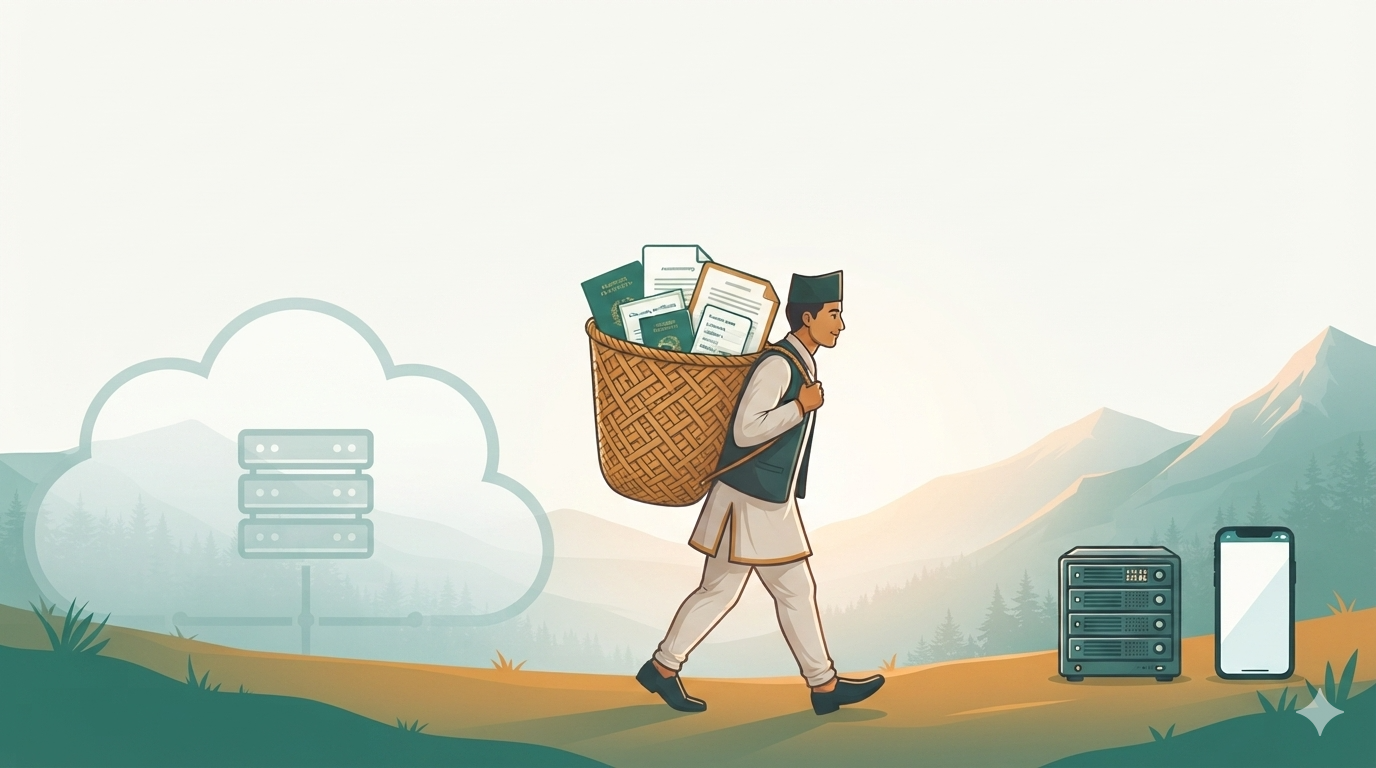
The question nobody asks
That question has become increasingly important. In July 2026, Nepal's Office of the Prime Minister and Council of Ministers directed government agencies not to use third-party mobile scanning applications for official documents, citing concerns that sensitive information could be transmitted to or stored on external servers.
The directive reflects a reality that extends far beyond government: when documents contain personal or confidential information, people want greater control over where that data lives.
DokoDocs was born from that idea.
One job, done exceptionally well
We believe a document scanner should do one job exceptionally well: help you capture, organize, and share documents — without making cloud storage or user accounts the default. By default, your scans stay on your device. If you choose to synchronize them, the destination is entirely up to you: your own server, your preferred cloud provider, or no cloud at all.
This local-first approach isn't about rejecting the cloud. Cloud storage is useful for many people. The difference is that it should be a choice, not an assumption.
Verify, don't trust
That philosophy naturally led us to make DokoDocs open source. Privacy is difficult to evaluate when the software itself is hidden. By publishing the source code, we let developers, security researchers, and organizations inspect how documents are processed, how optional synchronization works, and what information leaves the device.
Instead of asking users to trust our marketing, we'd rather give them the opportunity to verify our claims in the code.
Giving back
DokoDocs is also our way of giving back to the open-source community. Every developer has benefited from software built by others, and this project is our contribution in return. Whether someone fixes a bug, improves a translation, designs a better interface, or simply studies the code to learn Flutter — every contribution makes the project stronger.
Although DokoDocs is built in Nepal 🇳🇵, it is designed for anyone who values privacy, transparency, and ownership. Students, freelancers, lawyers, healthcare professionals, small businesses, and organizations around the world all face the same challenge: important documents deserve software that puts users in control.
Fundamentals first
The first release focuses on getting the fundamentals right — fast scanning, clean PDFs, offline operation, and optional synchronization. More advanced capabilities will come over time, guided by community feedback and real-world needs rather than feature checklists.
We're not trying to build the scanner with the longest feature list. We're trying to build one people can trust.
Because your documents are yours.